

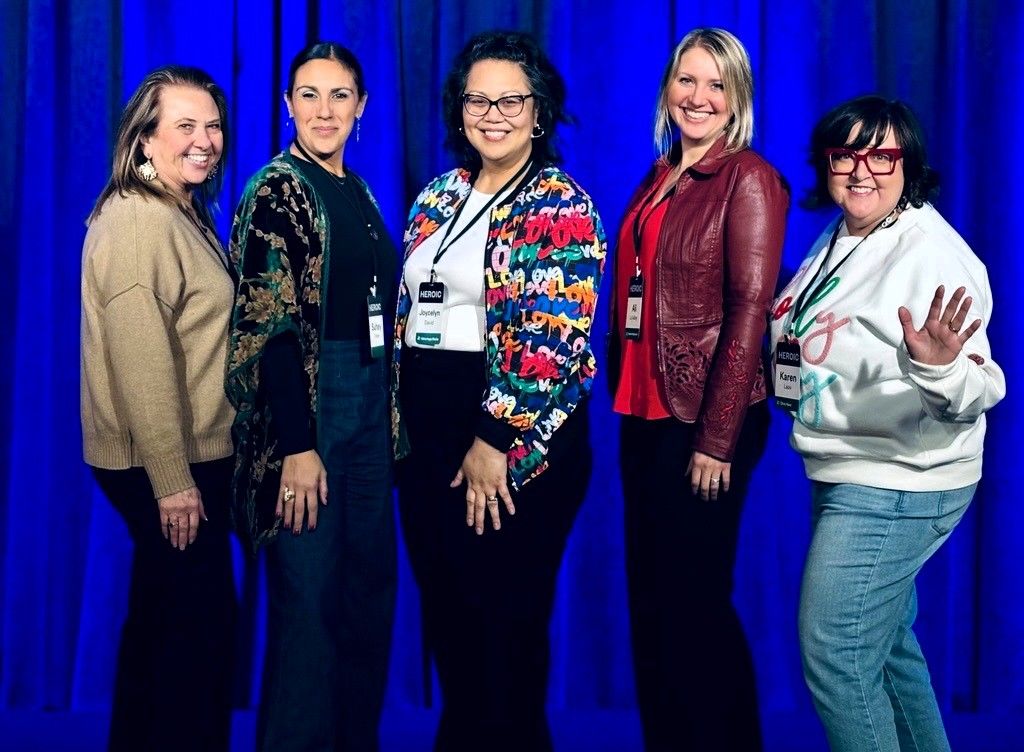
Having just completed my second session of the HEROIC GRAD program in New Jersey, I’ve been reflecting on what this experience revealed about leadership — and I expected to focus on delivery.
Instead, what stayed with me was the standard in the room.
Experienced executives. Established founders. Recognized experts.
All choosing to refine, recalibrate, and elevate.
There is something powerful about leaders who refuse to plateau.
Research consistently reinforces what high performers already understand:
According to Deloitte, organizations with strong learning cultures are 92% more likely to innovate and 52% more productive.
A study published in the Harvard Business Review found that CEOs who actively pursue personal development are significantly more likely to lead high-performing organizations.
The Center for Creative Leadership reports that leaders who intentionally develop communication capability dramatically increase team trust and engagement.
The takeaway is simple:
Leadership growth is not optional at the top — it is structural to organizational success.
This session at HEROIC was not about becoming a speaker.
It was about precision.
Clarity.
Influence.
As leaders, our ability to articulate vision determines whether strategy mobilizes people or merely sits on paper.
Communication is not a “soft skill.”
It is a force multiplier.
The most effective leaders I know do not assume competence equals completion. They operate from the belief that mastery is iterative.
The higher the responsibility, the greater the obligation to refine.
Professional development is often framed as something we provide to teams. But the data — and experience — tell a different story:
When leaders elevate their capability, performance ripples outward.
As Craig Groeschel says,
“Everybody wins when the leader gets better.”
This week was another intentional investment in that principle.
The work of leadership is never finished.
And that is exactly the point.